

Anyone who has tried to use a VPN to unblock a favorite show while traveling has likely noticed the same thing over the past year: it has gotten harder. Streaming platforms have invested heavily in detection systems that go far beyond simply blacklisting known VPN IP addresses, and VPN providers have responded with equally sophisticated countermeasures. The result is an ongoing technical arms race that shapes what actually works for everyday users, regardless of what a provider’s marketing page promises.
The Cat-and-Mouse Game, Explained
At its core, the conflict is simple. Streaming services license content on a region-by-region basis and are contractually obligated to enforce those boundaries, so they invest in identifying and blocking traffic that appears to originate from a VPN or proxy. VPN providers, in turn, want to offer a service that lets subscribers access content as if they were browsing from home or from a different country, so they invest in making their traffic indistinguishable from ordinary residential internet use.
Neither side is going to “win” permanently. Instead, the landscape shifts in cycles: a streaming platform tightens detection, a chunk of VPN IP ranges get blocked, providers rotate in fresh IP space or adjust their obfuscation techniques, and the cycle repeats. What has changed recently is the sophistication of the detection side, which has made the VPN response correspondingly more technical.
How Streaming Platforms Detect VPN Traffic
Modern detection rarely relies on a single signal. Platforms cross-reference the IP address against known data center ranges, examine whether many different accounts are logging in from the same narrow block of addresses in a short window, and analyze subtler network fingerprints such as latency patterns and DNS resolution behavior that can hint at a tunneled connection even when the IP itself looks clean. Some detection systems also flag inconsistencies between a device’s stated time zone or language settings and the location implied by its IP address.
Because this detection is layered, a VPN that only rotates IP addresses without addressing the other signals will still get flagged relatively quickly, which is why the more effective providers have moved toward multi-pronged solutions rather than a single trick.
Dedicated IPs and Traffic Obfuscation
One of the more durable responses has been the rise of dedicated or semi-dedicated IP addresses purchased specifically for streaming use. Rather than sharing a single IP among thousands of simultaneous users — a pattern that is itself a red flag to detection systems — some providers now offer smaller pools of residential-style or lightly shared addresses reserved for a limited number of subscribers, which more closely resembles normal home internet behavior.
Separately, obfuscation techniques that disguise VPN traffic as ordinary HTTPS traffic have become more common outside of their original use case of bypassing censorship. These same techniques make it harder for a streaming platform’s detection system to identify the connection as a VPN in the first place, since the traffic pattern no longer matches a known VPN protocol signature.
The Rise of SmartDNS and Hybrid Approaches
Not every user needs full encryption to unblock a show; sometimes all that is required is rerouting the DNS lookup that determines which regional server a streaming app connects to. SmartDNS-style features, often bundled directly into VPN apps, have grown in popularity because they tend to be faster than a full VPN tunnel and, in some cases, are detected differently than traditional VPN traffic. Several providers now let users toggle between a full VPN connection and a lighter DNS-only mode specifically for streaming, switching back to full encryption for general browsing.
This hybrid approach reflects a broader trend: providers are no longer treating “unblock streaming” and “protect my traffic” as the same feature, but as two related, separately optimized use cases within the same app.
Legal and Ethical Considerations Users Should Know
It is worth being upfront that using a VPN to access content libraries outside your home region typically sits in a gray area relative to a streaming platform’s terms of service, even where it is not illegal under local law. Users should be aware that platforms can and do suspend accounts they associate with persistent VPN use for content access, and that this risk exists independent of which VPN provider is used. None of the technical countermeasures described above eliminate that account-level risk; they simply reduce the odds of being detected at the network level in the first place.
What Users Should Expect Going Forward
Expect continued volatility rather than a stable equilibrium. A server location that reliably unblocks a given platform today may stop working within weeks, and providers that publish real-time server status pages showing which locations are currently working for which platforms have become genuinely useful rather than a nice-to-have. The most reliable providers in this space tend to be the ones large enough to maintain sizable, frequently refreshed IP pools, since smaller providers simply cannot rotate addresses fast enough to keep pace with detection updates.
Practical Tips for More Reliable Streaming Access
- Prefer providers that publish live, regularly updated server status information for streaming platforms.
- Try a dedicated or low-share IP option if your provider offers one for the platform you use most.
- Switch protocols within the app if one consistently fails; obfuscated modes often succeed where standard ones do not.
- Clear cookies and app cache after switching server locations, since some platforms cache your previous detected region.
- Keep expectations realistic: no provider can guarantee permanent access to every regional library.
Why Some Platforms Are Tougher Than Others
Not all streaming services approach detection with equal intensity, and the differences are not random. Platforms with the largest content libraries and the most complex regional licensing arrangements tend to invest the most heavily in detection, since they have the most to lose contractually if regional boundaries are not enforced. Smaller or more regionally focused platforms sometimes take a lighter touch, either because the licensing stakes are lower or because the engineering investment required is harder to justify against a smaller user base. This is part of why a VPN might reliably unblock one platform for months at a time while struggling constantly with another, even when using the exact same server and settings.
Understanding this asymmetry helps set realistic expectations: a provider’s inability to unblock the most aggressively defended platform is not necessarily a reflection of poor overall quality, and the same provider may perform excellently elsewhere.
The Growing Importance of App-Level, Not Just Browser-Level, Access
Much of the historical conversation around VPNs and streaming focused on browser-based access, but a large share of streaming consumption now happens through dedicated apps on smart TVs, streaming boxes, and game consoles, many of which cannot run a VPN client directly. This has pushed providers to invest more heavily in router-level VPN support and dedicated app integrations for smart TV platforms, since unblocking content in a browser on a laptop does little good for someone trying to watch on their living room television. Providers that offer clear setup guides for router-level configuration have become disproportionately valuable to users whose primary viewing device cannot install a VPN app natively.
Community Knowledge and Real-Time Reporting
Because server performance for streaming shifts so quickly, official provider documentation often lags behind reality. As a result, user communities and independent forums have become an important secondary source of information, with users reporting in near real time which specific servers are currently working for which platforms. Some providers have started to formalize this feedback loop by building in-app reporting features that let users flag when a server stops working for a particular streaming service, feeding that information back into internal monitoring rather than relying purely on external community chatter. This kind of tighter feedback loop tends to produce noticeably faster fixes than providers relying solely on internal testing.
Balancing Speed and Access
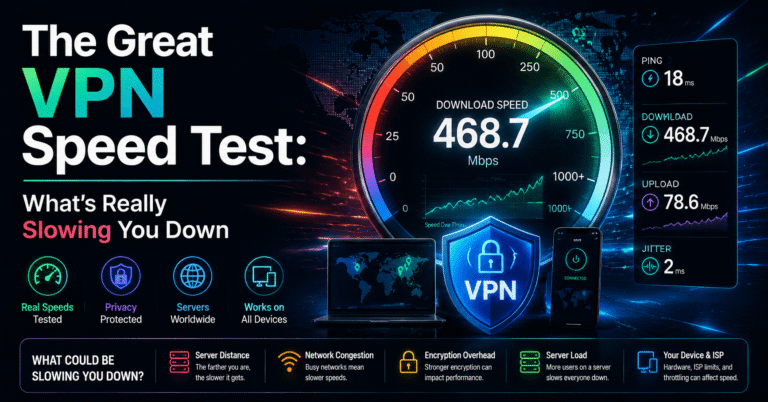
Streaming-optimized servers are not automatically the fastest servers on a provider’s network, and users sometimes have to make a small trade-off between raw speed and successful access. A server tuned and maintained specifically for unblocking a particular platform may carry more simultaneous streaming traffic than a general-purpose server, occasionally resulting in slightly lower peak speeds even though it succeeds where other servers fail. Users chasing the best possible streaming experience should treat “does it unblock the platform at all” as the first filter and “how fast is it” as the second, rather than the other way around, since a fast server that gets blocked outright is not actually useful for this particular purpose.
Conclusion
The streaming access arms race is not going away, and it is unlikely that either side gains a lasting, decisive advantage. What has changed is the level of technical investment on both sides, which means the gap between well-resourced VPN providers and smaller ones is widening when it comes to this specific use case. For users, the practical lesson is to judge a provider by its current, actively maintained streaming performance rather than by a static claim on a features page, since in this particular corner of the VPN world, yesterday’s result is not a reliable guide to tomorrow’s.
About the Author