

Mario Kart World Review: Nintendo Switch 2's Ultimate Racer
A New Era for Nintendo’s Racing Icon
Few franchises carry as much launch-window weight as Mario Kart, and Mario Kart World understands the assignment completely. As one of the headline titles for Nintendo Switch 2, it doesn’t just deliver another excellent entry in the long-running series, it fundamentally reimagines what a Mario Kart game can be, stitching together its many tracks into one enormous, seamlessly connected open world for the first time in franchise history.
Rather than selecting individual courses from a menu, players now drive freely across a sprawling, interconnected map of the Mushroom Kingdom and beyond, transitioning organically between iconic tracks, open plains, coastal roads, and hidden shortcuts. It’s a genuinely transformative shift for the series, one that turns simply getting to the starting line into its own small adventure filled with collectibles, hidden paths, and surprise encounters with roaming characters.
Racing That Feels as Great as It Ever Has
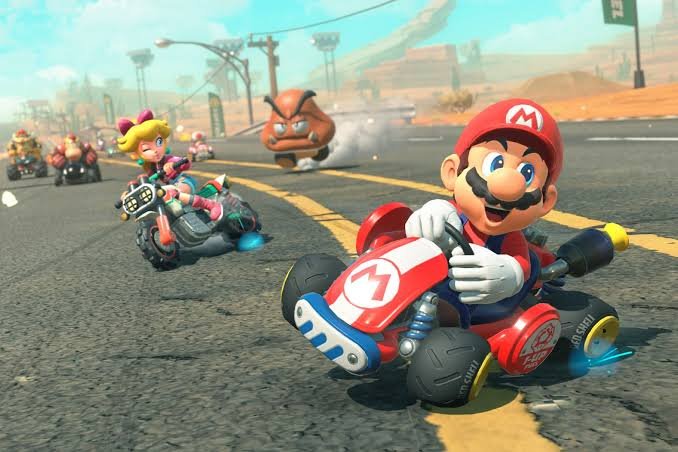
None of this structural ambition would matter if the core racing didn’t hold up, and thankfully it holds up magnificently. The moment-to-moment kart handling retains that unmistakable Mario Kart feel, tight and forgiving enough for newcomers while offering enough depth in drifting, mini-turbo chaining, and item management to satisfy series veterans chasing perfect lap times.
New traversal mechanics play a huge role here as well. Characters can now hop out of their karts entirely to climb, swim, or even grind along rails in certain sections, opening up branching route choices that reward exploration and course knowledge in a way previous entries never allowed. Discovering a hidden shortcut through a cave system that shaves precious seconds off your lap time is an incredibly satisfying feeling, and it adds a genuine strategic layer to races beyond simple item luck.
An Absolutely Massive Roster and Course Count
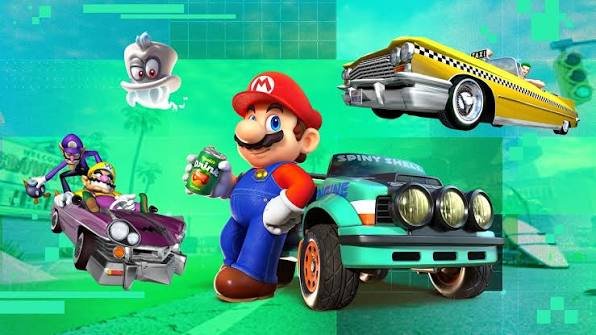
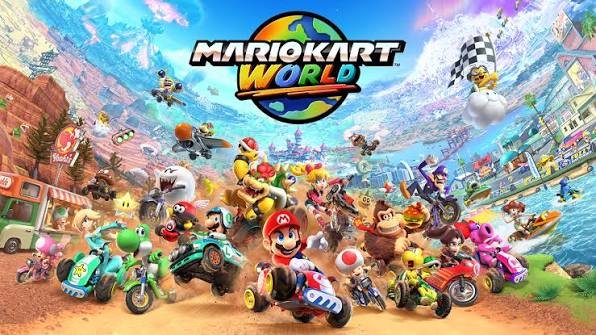
Mario Kart World launches with the largest roster in series history, blending classic favorites with a host of new and returning characters, each with their own subtle handling quirks tied to vehicle customization options. Combined with dozens of interconnected track segments that can be recombined into countless race configurations, the sheer amount of content on offer here is staggering, easily dwarfing any previous entry in the franchise.
Beyond traditional Grand Prix cups, the open-world structure enables entirely new modes as well, including a free-roam exploration mode perfect for soaking in the scenery and hunting down secrets at your own pace, alongside a chaotic new battle variant that makes clever use of the interconnected map’s verticality and hidden nooks.
Visual Showcase for Switch 2
As one of the system’s premier launch-window titles, Mario Kart World is unsurprisingly one of the best-looking games available on the new hardware. Tracks are rendered with vibrant, richly detailed environments, from lush jungle canopies to neon-lit city circuits, all running at a buttery smooth frame rate even during hectic 24-player online races, a new franchise high for participant count that speaks to the improved online infrastructure underpinning the experience.
The transition between the game’s many biomes as you drive across the open world is remarkably seamless, with essentially no visible loading or pop-in, a genuinely impressive technical feat that speaks to the improved horsepower Switch 2 brings to the table compared to its predecessor.
Online Play and Longevity
Online infrastructure has received a substantial overhaul as well. Matchmaking feels significantly snappier than previous entries, connection stability during larger races holds up impressively well even under the strain of two dozen simultaneous racers, and a revamped tournament creation suite gives communities powerful tools to host custom competitive events, complete with adjustable rulesets and shareable replay highlights.
Nintendo has also confirmed a steady stream of post-launch content, including additional tracks, characters, and seasonal events, suggesting Mario Kart World is positioned to be a long-term live-service pillar of the Switch 2 library rather than a one-and-done launch title.
Accessibility and Family Appeal
True to series tradition, Mario Kart World remains wonderfully accessible to players of all skill levels. A generous assortment of assist options, including auto-acceleration and smart steering, make the game approachable for younger or less experienced players, while the underlying skill ceiling around drift mechanics and item timing ensures the experience remains deeply engaging for competitive players chasing leaderboard supremacy.
A Few Growing Pains
The open-world structure, while ambitious, isn’t entirely without friction. Occasionally, free-roam traversal between race starting points can feel like padding for players simply looking to jump into a quick race, and the sheer scale of the interconnected map can be slightly overwhelming for newcomers trying to get their bearings early on. Thankfully, quick-travel options mitigate much of this friction after the opening hours, but it’s a noticeable adjustment period for series veterans used to a simple track-select menu.
Vehicle Customization and Character Quirks
Beyond the headline structural changes, Mario Kart World also deepens its vehicle customization systems considerably. Karts, bikes, and a handful of new hybrid vehicle types can each be outfitted with unlockable frames, wheels, and gliders, all of which subtly affect handling, top speed, and off-road performance in ways that reward genuine experimentation rather than simply chasing the highest stat totals. Discovering a personal favorite combination that suits your driving style, whether that’s a drift-heavy setup optimized for tight technical circuits or a heavier build built for barreling through off-road shortcuts, adds a satisfying layer of build customization the series has only lightly explored before.
Character quirks add another welcome layer of personality. Certain racers now trigger small, unique interactions when driving past specific landmarks or fellow characters on the open map, little touches of environmental charm that reward players who take the scenic route rather than beelining straight for the next checkpoint.
Local Multiplayer and Couch Co-op
True to series tradition, local multiplayer remains a major pillar of the experience, and Switch 2’s improved hardware ensures split-screen races hold up beautifully even with four players racing simultaneously on a single console. Frame rate remains stable throughout, and the interconnected open-world map translates surprisingly well to split-screen play, with clever camera framing that keeps all racers oriented even during the game’s most chaotic multi-path shortcut sequences. For families and groups of friends gathered around a single television, this remains one of the best couch multiplayer experiences available on any platform.
Item Balancing and Competitive Depth
Item balancing has clearly received careful attention as well. Returning staples like the green and red shells, banana peels, and the ever-controversial blue shell are joined by several new items that add fresh tactical wrinkles without upending the series’ famously chaotic rubber-band pacing. Competitive players will appreciate subtle rebalancing that reduces some of the more frustrating luck-based swings of previous entries, while casual players will still enjoy the thrill of a last-second comeback thanks to a well-tuned item distribution system tied to race position.
Handheld Performance on the Go
Given Switch 2’s hybrid nature, handheld performance deserves special mention. Remarkably, docked and handheld modes deliver a nearly identical experience, with only a modest resolution reduction on the go rather than any meaningful sacrifice to frame rate or draw distance. This makes Mario Kart World just as satisfying to play during a commute or a long car ride as it is on a big screen at home, reinforcing the flexibility that has always been at the heart of Nintendo’s hybrid console philosophy.
Sound Design and Soundtrack
The audio side of the package deserves recognition too. A sweeping, dynamic soundtrack shifts naturally as you transition between biomes on the open map, swelling into more upbeat, percussive arrangements as you approach an active race and mellowing into breezy ambient themes during quieter free-roam exploration. Familiar series jingles and sound effects make a welcome return, remixed with noticeably richer instrumentation that takes full advantage of the improved hardware, while crowd cheers and environmental audio cues add an extra layer of immersion to the game’s biggest circuits.
Value for Launch Window Pricing
Given its ambitious scope, sprawling roster, and promised ongoing support, Mario Kart World also represents strong value relative to its launch price point, especially compared to some other big-budget console exclusives arriving alongside it. Between the main campaign, free-roam exploration, online play, and split-screen multiplayer, there is an enormous amount here to justify its position as a flagship pack-in style title for the new console generation.
Pros and Cons
Pros:
- Groundbreaking interconnected open-world structure
- Excellent, deep kart handling that still feels unmistakably Mario Kart
- Massive character roster and course variety
- Gorgeous visuals and smooth performance even in 24-player races
- Robust online infrastructure and promised long-term support
Cons:
- Open-world traversal can occasionally feel like padding
- Slight learning curve navigating the interconnected map early on
The Verdict
Mario Kart World is a bold, confident reinvention of one of gaming’s most beloved franchises, using the horsepower of Switch 2 to deliver a genuinely transformative structural leap without ever losing sight of what made Mario Kart great in the first place. It’s an essential system-seller and one of the finest racing games available on any platform today.
Topody Score: 9/10 — A landmark reinvention that redefines what a Mario Kart game can be.
About the Author