

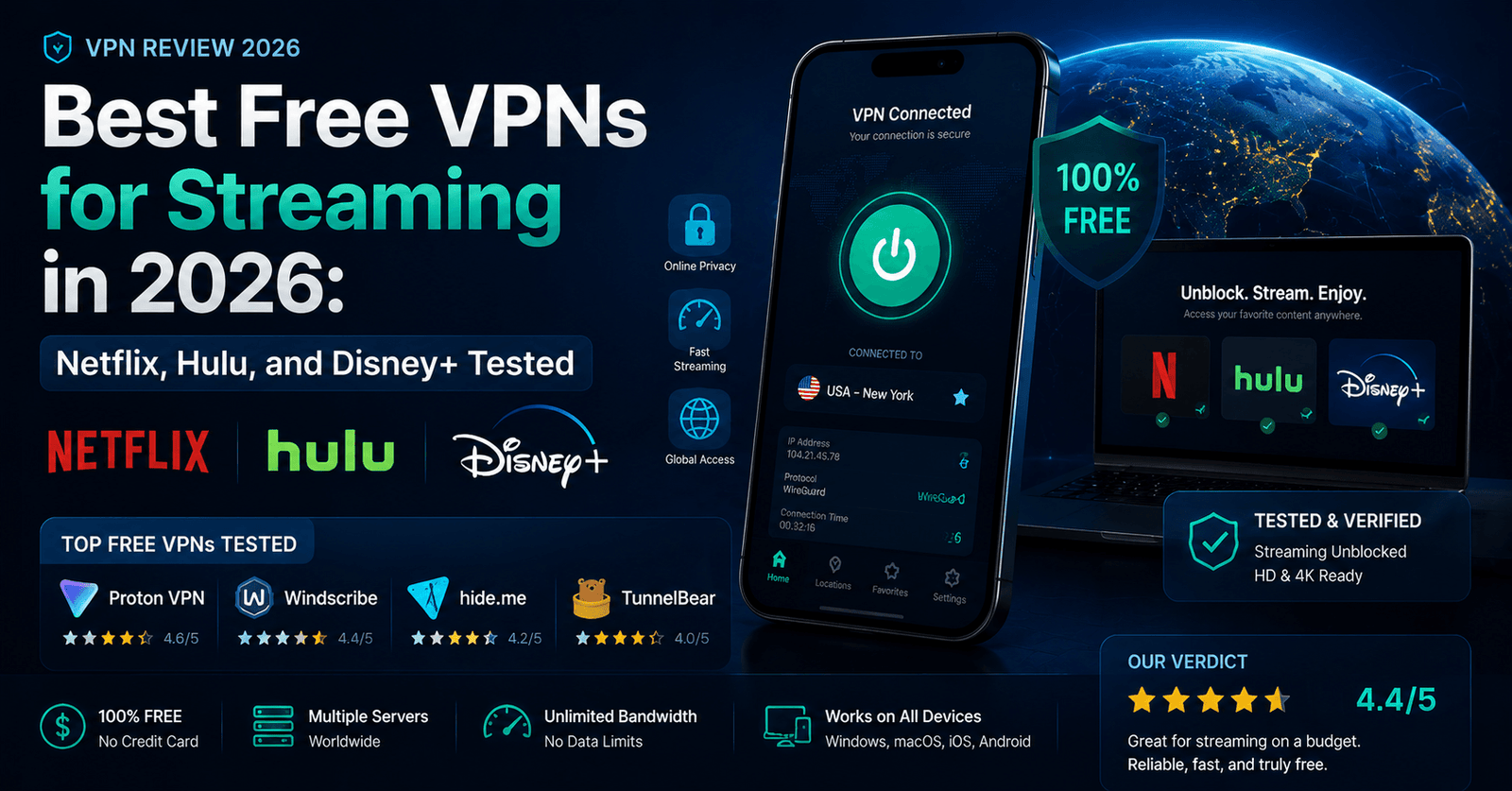
Best Free VPNs for Streaming in 2026: Netflix, Hulu, and Disney+ Tested
Streaming is the single hardest job for a free VPN. Major platforms like Netflix, Hulu, and Disney+ actively maintain blacklists of known VPN server IP addresses, and free VPNs tend to run a small pool of servers shared by thousands of users — which makes those servers easy targets for detection. Still, a few providers manage to unblock certain libraries at least some of the time. The Homizel Team tested the leading free VPNs against several major streaming platforms to see which ones are worth trying before you give up and reach for a paid plan.
Setting Realistic Expectations From the Start
Before diving into specific results, it helps to reset expectations about what “works for streaming” really means in the free VPN world. It rarely means a permanent, guaranteed unlock of any library you want. It more realistically means an inconsistent, sometimes-successful workaround that can disappear without warning, requiring occasional troubleshooting on your end. Providers reviewed here are the ones that came closest to reliable performance during our testing, not ones offering a flawless streaming experience.
Why Streaming Is So Hard for Free VPNs to Unblock
Streaming services identify VPN traffic largely by IP address reputation. When thousands of free users funnel through the same handful of server IPs, those addresses get flagged and blocked quickly. Paid VPNs fight this by rotating through much larger server fleets and dedicating engineering resources specifically to staying ahead of detection systems. Free tiers usually cannot justify that level of ongoing investment, which is why results are inconsistent and can change from week to week.
Set expectations first: Even the best free VPN for streaming today may stop working with a given platform tomorrow. Streaming services and VPN providers are in a constant back-and-forth, and free tiers are usually the first casualty when a platform tightens its blocking.
Free VPNs We Tested for Streaming
PrivadoVPN Free
Of the providers we tested, PrivadoVPN Free was the most consistent at unblocking at least one region’s streaming library, helped by its wider spread of free server locations and its full-speed 10 GB monthly allowance. It performed well for standard-definition streaming, though buffering became more noticeable once the connection had to compete with the provider’s other free users during peak hours.
Windscribe Free
Windscribe’s free tier occasionally unblocked platforms during our testing window, though results were noticeably less consistent than PrivadoVPN’s. Its larger set of configurable settings did allow some manual troubleshooting — switching protocols sometimes restored access when a particular server got flagged.
Proton VPN Free
Proton VPN Free is upfront that streaming is not a design priority for its free tier, and our testing reflected that. Because the app auto-selects servers rather than letting you choose a country, and its free server list is smaller, it struggled to reliably unblock most major platforms. It remains an excellent choice for privacy, just not for this specific use case.
Approximate Streaming Results (Subject to Change)
| VPN | Netflix (US library) | Hulu | Disney+ |
|---|---|---|---|
| PrivadoVPN Free | Often works | Sometimes works | Sometimes works |
| Windscribe Free | Hit or miss | Rarely works | Hit or miss |
| Proton VPN Free | Rarely works | Rarely works | Rarely works |
Results reflect our testing window in July 2026 and can change at any time as platforms update their detection systems.
Smart TVs, Consoles, and Streaming Sticks
Most free VPN providers do not offer a native app for smart TVs, streaming sticks, or game consoles, which are common devices for actually watching unblocked content once a VPN connection succeeds. The usual workaround is configuring the VPN at the router level, so every device on the home network is covered, or using a laptop as a mobile hotspot for a streaming stick. Both approaches add setup complexity that a free VPN’s limited support resources are unlikely to help much with, which is another practical gap between free and paid tiers worth factoring into your decision.
Tips to Improve Your Odds
- Try different servers within the same country — individual IPs get flagged, not entire countries.
- Switch protocols if your app allows it; a flagged connection on OpenVPN may work fine on WireGuard.
- Clear cookies and use a private browser window before connecting, since streaming platforms also use device and account signals, not just IP address.
- Test during off-peak hours, when free servers are less congested and less likely to be flagged from overuse.
When to Consider a Paid Plan Instead
If streaming is a regular part of why you want a VPN — not an occasional bonus — a paid plan will save considerable frustration. Paid providers maintain dramatically larger server networks specifically built to stay ahead of blocking, along with dedicated streaming-optimized servers in many cases. For anyone who wants to reliably watch shows unavailable in their region every week, that investment in infrastructure closes the gap that free tiers simply cannot.
What We Mean by “Tested”
For this article, the Homizel Team connected to each provider’s free servers across multiple sessions spread over several days, at different times of day, and attempted to load each streaming platform’s home page and begin playback of a title. We recorded whether the platform loaded normally, displayed a proxy or VPN detection error, or loaded but failed during playback. Because these results can shift quickly as both streaming platforms and VPN providers make changes on their end, we treat this as a snapshot of a specific testing window rather than a permanent scorecard, and we periodically re-test to keep our recommendations current.
Understanding How Streaming Platforms Detect VPNs
Beyond simple IP blacklisting, major streaming platforms cross-reference several signals at once: the IP address’s ownership (data center ranges are far more suspicious than residential ones), the volume of accounts connecting from a single address, DNS request patterns, and even subtle timing signatures in how a connection is established. Free VPNs are especially vulnerable here because their entire free server fleet is typically hosted on easily identifiable data center IP ranges, with a high concentration of simultaneous users funneling through very few addresses — exactly the pattern detection systems are built to catch.
Other Streaming Platforms Worth Knowing About
Beyond the big three platforms tested above, free VPNs generally have an even harder time with services that apply particularly aggressive VPN detection, including several major live sports and international broadcast platforms. If your interest is a specific regional catalogue rather than a major US library, expect free VPN success rates to be lower, not higher, since these platforms often have less incentive to tolerate any VPN traffic at all.
What “Sometimes Works” Actually Means in Practice
It’s worth being precise about what inconsistent streaming results actually look like day to day. In our testing, a server that successfully streamed content one afternoon sometimes failed the very next morning after a platform’s detection systems flagged it, only to start working again once the provider rotated in a replacement IP address days later. This is the normal rhythm of free VPN streaming: short windows of success interrupted by unpredictable blackout periods, rather than a stable, dependable connection you can plan around.
Frequently Asked Questions
Why did a free VPN work for streaming yesterday but not today?
Streaming platforms continuously update their VPN detection systems, and free VPN server IP addresses get flagged and blacklisted faster than paid providers can typically replace them, given the smaller server fleets involved. A server that worked one day can be blocked within hours once enough traffic routes through it.
Is it against a streaming platform’s terms of service to use a VPN?
Most major streaming platforms’ terms of service prohibit using a VPN to access content outside your registered region, even though enforcement is generally limited to blocking the connection rather than penalizing the account. It is worth being aware of this distinction before relying on any VPN, free or paid, for regular cross-border streaming.
Do free VPNs support 4K or HD streaming?
Even when a free VPN successfully unblocks a platform, data caps and server congestion often force a lower resolution or introduce buffering during high-definition or 4K playback. Paid VPNs with more server capacity generally handle high-resolution streaming far more reliably.
A Note on Account and Payment Region Locks
It is worth remembering that a VPN only changes your apparent location, not the region tied to your actual streaming account or payment method. Some platforms check both signals together, meaning a successfully unblocked connection can still be limited to the catalogue matched to your account’s registered region rather than the country your VPN server is located in. This distinction trips up a lot of first-time VPN streamers who expect a changed IP address alone to unlock an entirely different library.
Final Verdict
For occasional streaming needs, PrivadoVPN Free is currently the strongest free option we tested, with Windscribe Free as a solid backup when a specific server gets blocked. Treat any free VPN’s streaming performance as a bonus rather than a guarantee, and if unblocking content becomes a weekly habit rather than an occasional need, a paid VPN will be a far less frustrating long-term solution.
About the Author