

The gaming industry rarely stands still, but the current stretch feels different. Studios are rethinking what a “release” even means, players are demanding more transparency about how games are built and monetized, and technology that once felt experimental is quietly becoming standard. If you have been keeping half an eye on gaming headlines lately, you have probably noticed the same handful of themes popping up again and again. Here is a closer look at the trends that are genuinely reshaping how blockbuster games get made, marketed, and played.
1. Longer Development Cycles, Louder Community Expectations
Big-budget titles increasingly take four, five, even six years to reach players. That extended runway lets studios polish mechanics, iterate on feedback from closed betas, and avoid the rushed launches that plagued the industry a decade ago. But it also means communities have more time to build expectations, theorize, and occasionally turn restless when marketing goes quiet for a few months.
Smart studios have responded by treating silence as the enemy. Regular developer diaries, behind-the-scenes videos, and community roundtables have become standard practice, not a nice-to-have. Games that maintain a steady drumbeat of communication tend to arrive with a warmer reception than those that vanish and reappear only at launch with a trailer and a release date.
2. The Live-Service Model Is Maturing, Not Disappearing
A few years ago it seemed like every publisher wanted its own live-service juggernaut. Many of those bets did not pay off, and the graveyard of shuttered always-online games is a real cautionary tale. But rather than killing the model outright, that shakeout has made the surviving live-service titles smarter. Successful games in this space now treat content cadence as a craft: seasonal narratives that actually go somewhere, battle passes that respect players’ time, and monetization that feels optional rather than mandatory.
The lesson publishers seem to be internalizing is that live-service success is not about launching more games in this category, it is about picking the right concept and supporting it for years with genuine care. Expect fewer live-service announcements overall, but higher quality and longer support windows for the ones that do ship.
3. Cross-Platform Play Is No Longer a Selling Point, It Is an Expectation
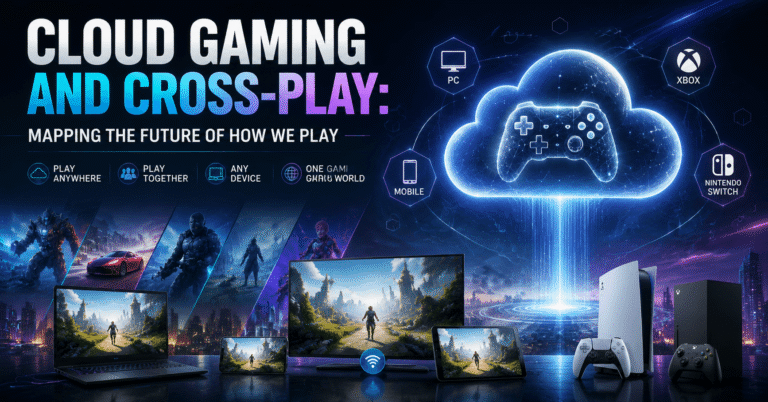
There was a time when “cross-play supported” was a bullet point worth shouting about on a store page. Now it is closer to table stakes. Players expect to be able to squad up with friends regardless of which console, PC storefront, or handheld device everyone happens to own. Games that skip this feature increasingly get called out in reviews and forums, even when the core gameplay is excellent.
This shift has ripple effects on how studios architect their games from day one. Building cross-play in from the start is far cheaper than bolting it on after launch, so engine and backend decisions made early in development are increasingly influenced by this expectation.
4. Handheld and Hybrid Hardware Keep Growing
The success of hybrid consoles and a wave of Windows-based handhelds has pushed studios to think seriously about performance scaling. A game can no longer be designed purely with a high-end desktop GPU in mind; it needs to gracefully scale down to a device that fits in a jacket pocket without becoming an unrecognizable, stripped-down experience.
This has quietly driven renewed investment in optimization work, upscaling technology, and art pipelines that hold up at multiple resolutions. Studios that get this right are rewarded with a much larger addressable audience, since handheld play has become a major part of how people fit gaming into busy schedules.
5. AI Tools Are Changing Production, Not Replacing Designers
Artificial intelligence has become part of the conversation in nearly every corner of game development, from procedural asset generation to smarter QA testing that can catch bugs faster than manual playtesting alone. The headlines can make it sound like these tools are replacing creative teams, but the reality on the ground is more nuanced. Studios are using AI-assisted tooling to handle repetitive production tasks so that human designers, writers, and artists can spend more time on the parts of a game that actually need a human touch: pacing, tone, emotional beats, and the countless small decisions that make a world feel alive.
Expect this to remain a contentious topic among players and industry workers alike, with ongoing debate about credit, labor, and where the line should be drawn. It is one of the more important conversations happening in gaming right now, and it is far from settled.
6. Remakes and Remasters Are Getting More Ambitious
Nostalgia has always been a powerful force in entertainment, but the current generation of remakes goes well beyond a simple resolution bump. Studios are rebuilding combat systems, reworking pacing, and sometimes restructuring entire acts of a story to fit modern expectations, while trying to preserve what made the original beloved in the first place. It is a delicate balancing act, and when it works, it introduces a beloved game to an entirely new generation of players who never touched the original.
7. Physical Media Is Becoming a Niche, Premium Choice
Digital storefronts dominate sales figures across nearly every platform, but there is a small, passionate resurgence in collector’s editions, limited physical runs, and boutique packaging. Rather than trying to win back the mainstream buyer, publishers are leaning into this as a premium offering for enthusiasts willing to pay for something tangible and well-crafted.
What This Means for Players
Taken together, these trends point toward an industry that is slowing down in some ways and speeding up in others. Development timelines are stretching, but communication with players is becoming more constant. Business models are consolidating around fewer, better-supported live-service titles. Hardware diversity means your favorite game increasingly needs to work well whether you are sitting at a desk or lounging on a couch with a handheld.
None of this guarantees smoother launches or fewer disappointments, but it does suggest a maturing industry that has learned some hard lessons from the past several years. For players, staying informed about these shifts is one of the best ways to set realistic expectations and get more enjoyment out of the games you choose to invest your time in.
Topody will keep tracking these trends as they evolve, because understanding the forces behind the headlines is often just as interesting as the headlines themselves.
About the Author